5-min read

The Next Generation of Safety Is Already in the Driver’s Line of Sight
For decades, the vehicle mirror has served a simple purpose: helping drivers see the road around them. But as safety expectations rise and distracted driving becomes a growing concern, that role is expanding. Mirrors are no longer just reflective surfaces. They are becoming one of the most strategic locations in the vehicle for integrating visibility, sensing, and driver awareness technologies.
Distracted driving remains one of the most persistent safety challenges facing the industry. As vehicles add more displays, connectivity features, and driver assistance systems, the task is no longer just helping drivers see — it is helping them stay aware. That shift is forcing engineers to think differently about where safety intelligence should live inside the vehicle. Increasingly, the answer points back to a familiar but evolving location: the mirror.
A Natural Position for Both Visibility and Awareness
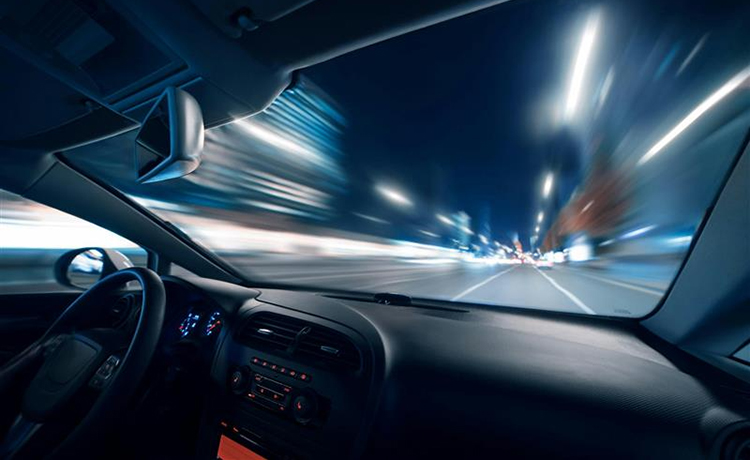
Few components sit in a more advantageous position than the interior mirror. It occupies a central, unobstructed line of sight between the driver and the road, while also providing a clear view of the cabin. This placement uniquely suits it for integrating both outward visibility with inward sensing.
As driver & occupant monitoring systems become more common, mirror integration offers a practical way to assess driver attention without adding new devices that clutter the cabin. From this position, camera-based systems can detect signs of distraction, fatigue, or inattention and contribute to enhanced passenger safety, all while remaining invisible to the user. This technology supports safety while preserving a natural driving experience.
The same logic applies to visibility. Video rear-view and camera-based mirror systems can expand the driver’s field of view, reduce blind spots, and improve performance in low-light or obstructed conditions. Because the mirror is already the place drivers instinctively look for situational awareness, enhancing it often feels more natural than introducing entirely new displays.
Integration > Adding Features
As vehicles evolve toward more software-defined architectures, the challenge is no longer just how to add more sensors, but how to integrate them intelligently. Standalone cameras, displays, and monitoring systems can increase complexity, cost, and potentially confuse drivers – especially if they are not part of a cohesive system.
Mirror-based integration is an ideal integration point for consolidating multiple safety functions in a location drivers already trust and rely on. Combining digital visibility, driver monitoring, and occupant sensing within a single module allows automakers to scale advanced safety features more efficiently across vehicle programs while maintaining consistent user experiences.
This approach also supports broader industry goals. Driver monitoring helps address distracted driving, while occupant sensing enables new safety features tied to seating position, passenger presence, and driver readiness. When these capabilities are integrated into a single system, they can improve safety, reduce complexity, and deliver greater overall value than when deployed as separate features.
Balancing Capability, Regulation and User Acceptance
The shift toward digital vision and interior cabin sensing brings clear benefits, but it also introduces new challenges. Regulations for camera-based mirrors and driver monitoring differ across regions, and expectations around privacy and usability continue to evolve. Even when these technologies improve safety, they still need to feel intuitive and trustworthy for drivers to accept them.
Designing systems that support drivers without overwhelming them requires careful balance. Alerts must be helpful without causing distraction. Monitoring must be accurate without feeling intrusive. New interfaces should feel familiar, rather than forcing drivers to learn entirely new behaviors.
These considerations are shaping how automakers approach the next generation of safety features. Instead of adding more isolated technologies, the focus is shifting toward solutions that can be integrated into existing vehicle touchpoints.
Rethinking a Familiar Component
As the industry aims to reduce distracted driving and enhance safety, innovation won’t come solely from entirely new components. In many cases, it will come from rethinking the role of the ones already in front of us.
The mirror is a prime example. Once defined purely by reflection, it is evolving into a platform for digital vision, driver awareness, and integrated sensing. Its strategic position, familiarity, and multifunctionality make it one of the most logical places to bring multiple safety technologies together.
For automakers, the question is no longer whether mirrors will evolve. It is how to use that evolution to create systems that are more intuitive, more scalable, and ultimately safer for the people behind the wheel.

We want to hear from you
Send us your questions, thoughts and inquiries or engage in the conversation on social media.
Related Stories
4-min read
The Real Challenge of Software-Defined Vehicles Isn’t Software
Read story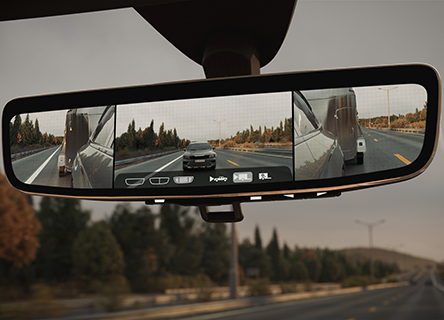
5-min read
ClearView™ Vision System: One Platform, Four Ways to See More
Read storyStay connected
You can stay connected with Magna News and Stories through email alerts sent to your inbox in real time.